
Predict and control insect pressure in high-value vegetables
Whether you grow in greenhouses, tunnels, or open fields, insect pressure in vegetables is changing fast. Trapview gives growers, crop advisors, and quality managers daily visibility on key pests — so they can protect yields, meet residue limits, and secure programs with demanding buyers.
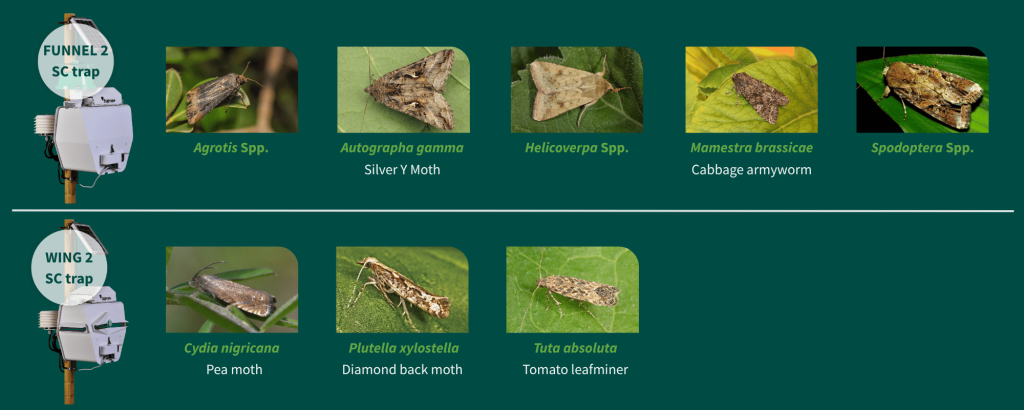
Main pests monitored
- Tuta absoluta (Tomato leafminer)
- Plutella xylostella (Diamondback moth)
- Autographa gamma (Silver Y moth)
- Mamestra brassicae (Cabbage armyworm)
- Helicoverpa spp.
- Spodoptera spp. (Armyworms)
- Agrotis spp. (Cutworms)
- Cydia nigricana (Pea moth)
The challenge: high value, low tolerance
Vegetables sit at the most demanding edge of agriculture: fresh, fragile, and perishable, yet expected to meet strict supermarket and export standards. With such high value per hectare, a few holes, blemishes, or residue traces can downgrade entire batches and wipe out margins.
From spot checks to daily, automated pest insight
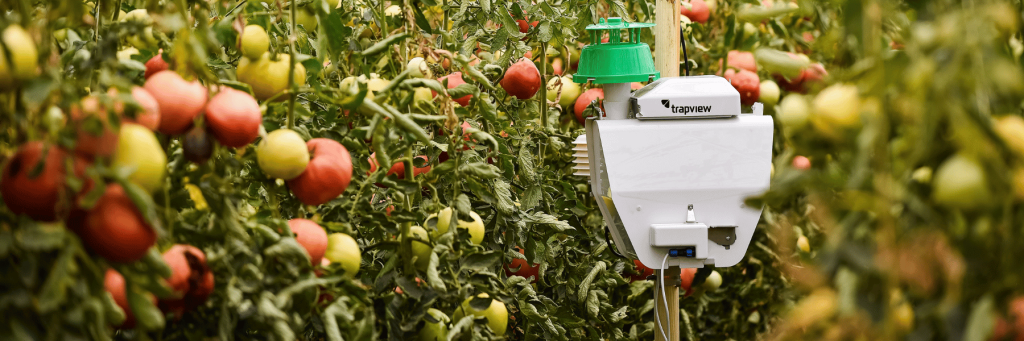
Trapview provides an early warning system for pest insects based on fully automated monitoring across vegetable blocks. Traps capture and analyse insect images daily, and AI helps identify trends so agronomists see exactly where and when pressure is building.
- Detect first flights and population peaks in real time
- Follow pest trends across greenhouses, tunnels, and open-field blocks
- Simplify decisions on when to react — and when you can safely wait
- Support rotation and succession crops with forward-looking risk insights
Precision that answers real vegetable-production questions
Harvest quality & residues
Trapview helps time treatments so you keep damage under control while meeting strict residue limits and customer specifications — especially close to harvest.
Crop rotation & continuity of supply
By combining daily monitoring with forecasting, Trapview helps you anticipate pest pressure between crops and plantings, reducing carry-over risk and protecting continuity of supply.
Labour & scouting efficiency
With automated traps, scouts and agronomists focus on problem areas instead of routine checks — saving time while improving the quality of decisions.
Traceability & buyer programmes
Centralised, validated data supports retailer or processor programmes, audits, and IPM commitments — proving when pressure increased and how you reacted.

Vegetable pest monitoring, redefined
Detect changes as they happen
Pest behaviour is evolving — new species, wider ranges, faster cycles. Trapview provides daily, automated visibility across crops so you detect changes early, not after damage appears.
Optimise crop protection timing
By combining automated counts with predictive modelling, Trapview pinpoints the right timing for applying crop protection — essential in fast-growing crops and short pre-harvest intervals.
Ensure quality at scale
Geo-located traps and area-wide views show where pressure builds, helping you act early and keep quality consistent across farms, suppliers, and regions.
Protect value across the chain
From growers to processors and retailers, Trapview provides shared visibility on pest pressure — ensuring better timing, lower residues, and traceable proof of sustainable practices throughout the value chain.

Our Experience
 Automated monitoring of key vegetable pests for over 10 years
- Countless trials in greenhouse and open-field vegetables demonstrating both trapping efficiency and forecasting accuracy
- Multiple large-scale networks of fully automated traps — cutting monitoring labour and dramatically improving data quality