
Smart pest monitoring for healthier orchards
From stone fruits to pome fruits, tree nuts, olives, berries and many more — success in orchards depends on perfect timing. Trapview helps agronomists, growers, and cooperatives monitor pest flights in real time — so every intervention happens exactly when it matters, not every 10 days by routine.
Main pests monitored
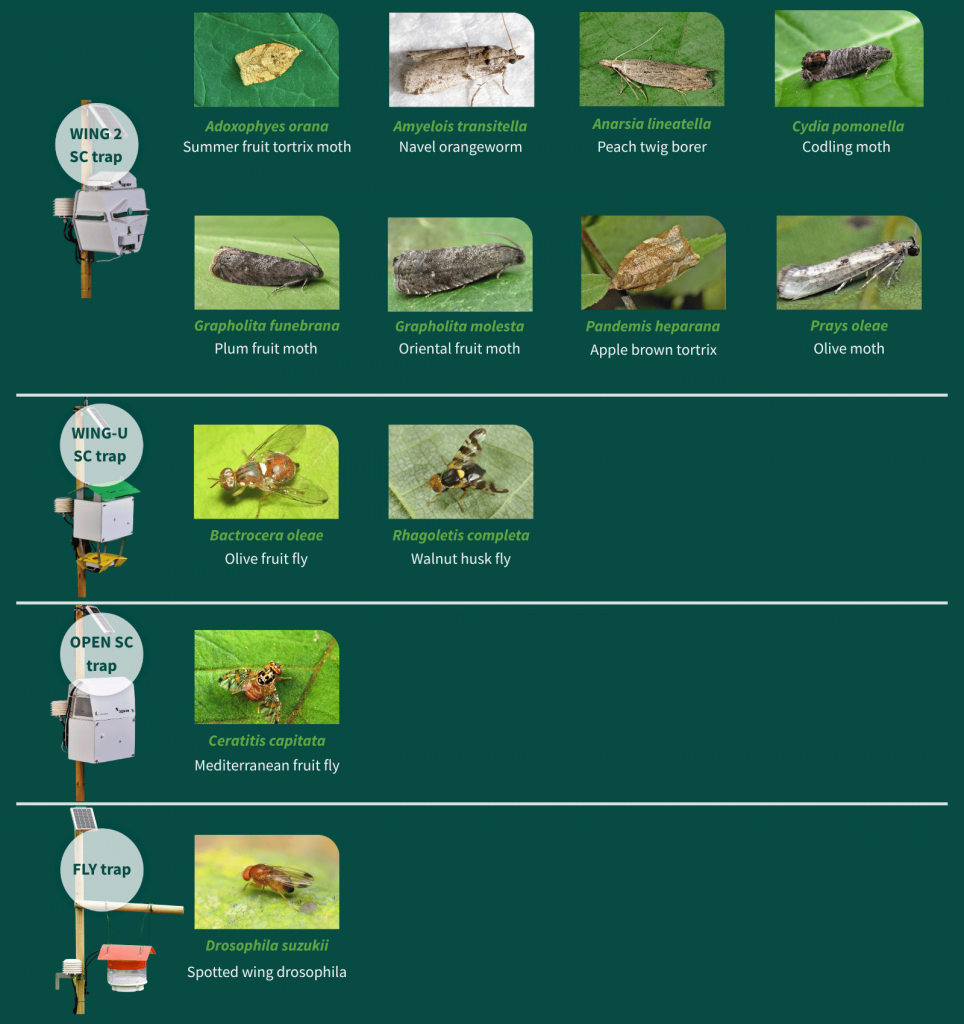
- Cydia pomonella (Codling moth)
- Bactrocera oleae (Olive fruit fly)
- Ceratitis capitata (Mediterranean fruit fly)
- Drosophila suzukii (Spotted wing drosophila)
- Amyelois transitella (Navel orangeworm)
- Adoxophyes orana (Summer fruit tortrix moth)
- Pandemis heparana (Apple brown tortrix)
- Grapholita molesta (Oriental fruit moth)
- Rhagoletis completa (Walnut husk fly)
- Prays oleae (Olive moth)
- Grapholita funebrana (Plum fruit moth)
- Anarsia lineatella (Peach twig borer)

The challenge: too many pests, too many generations, too little time
Keeping fruit at premium grade is the top priority — but overlapping pest generations and repeated attacks make it harder every season. Quality and yield are constantly at risk, while default “every-10-days” spray programs waste money and increase residue levels and pest resistance without ensuring real control.
From calendar programs to data-driven precision
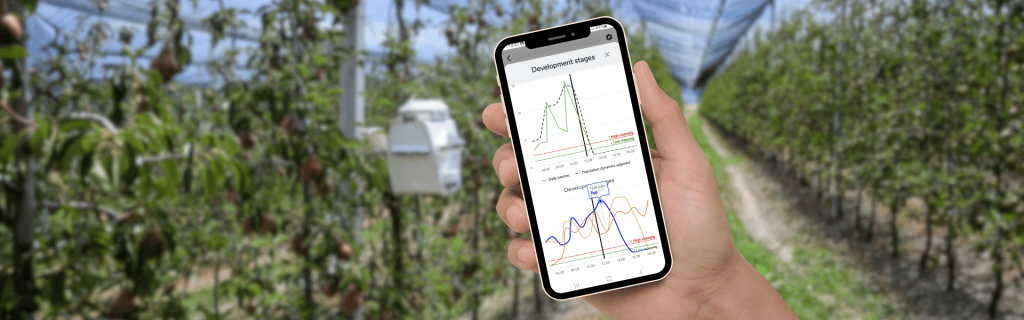
Trapview automates orchard pest monitoring — capturing, identifying, and analysing pest flights daily. AI models predict population peaks and development stages, replacing calendar programs with evidence-based action.
- Detect pest peaks before egg-laying and larval entry
- Verify crop protection efficacy and adapt in time
- Standardise decisions across orchards and co-ops
- Create a traceable record for quality and residue audits
Precision that protects fruit and profitability
Timing & verification
Trapview shows flight peaks in real time, helping agronomists time treatments or verify disruption programs with accuracy.
Harvest quality & residues
Growers protect high-value fruit without late spraying, keeping premium grade while avoiding residue rejections.
Coordination across growers
Co-ops and marketers synchronise actions across members, ensuring every lot meets retailer standards and avoiding downgraded batches.
Risk & reputation
Retailers demand proof of sustainability and quality. Trapview provides the audit trail and early-warning data needed to maintain access to premium markets.
Orchard pest monitoring, redefined
Detect flights as they start
Trapview tracks daily activity of key pests, identifying risk windows long before larvae enter the fruit.
Verify program efficacy
Compare real trap data with expected crop protection performance to confirm success or flag early failures — switching tactics before yield or quality loss.
Optimise interventions
Automated alerts and heatmaps guide teams to act where needed, reducing unnecessary sprays and saving time.
Value for the entire chain
From field techs to marketers and retailers, everyone gains: fewer rejections, stronger compliance, and consistent supermarket-grade fruit.

Our Experience
 Automated monitoring of key orchard pests for over a decade
- Validated forecasting for major pest insects in different fruit-growing regions
- CEPP certificate
- Large-scale networks deployed with cooperatives and quality-control programs