
The European corn borer (Ostrinia nubilalis) is one of the most important pests of maize and corn in Europe. Larvae bore into stalks and ears, weakening plants, opening the door to secondary infections and reducing both yield and grain quality. The key to limiting this damage is timing: acting too early or too late can mean wasted treatments or missed protection.
This season, Trapview users across Europe monitored Ostrinia with AURA 2 SC, our fully automated, UV-light insect trap. Here is what the data and the field feedback told us.

AURA 2 SC – fully automated UV-based trap
Why the first catches matter
For Ostrinia, the first catches in the trap signal that adult flight has started. That is the moment crop advisors have been waiting for: it marks the beginning of the period in which egg-laying, and later larval damage, can be expected.
AURA 2 SC proved to be a very effective tool for capturing Ostrinia. Because catches are detected reliably and reported in near real time, advisors could see the first moths quickly, the day Ostrinia appeared. Based on these first catches, they were able to plan the next steps, anticipate upcoming events, and decide when to act to protect maize before damage occurred.
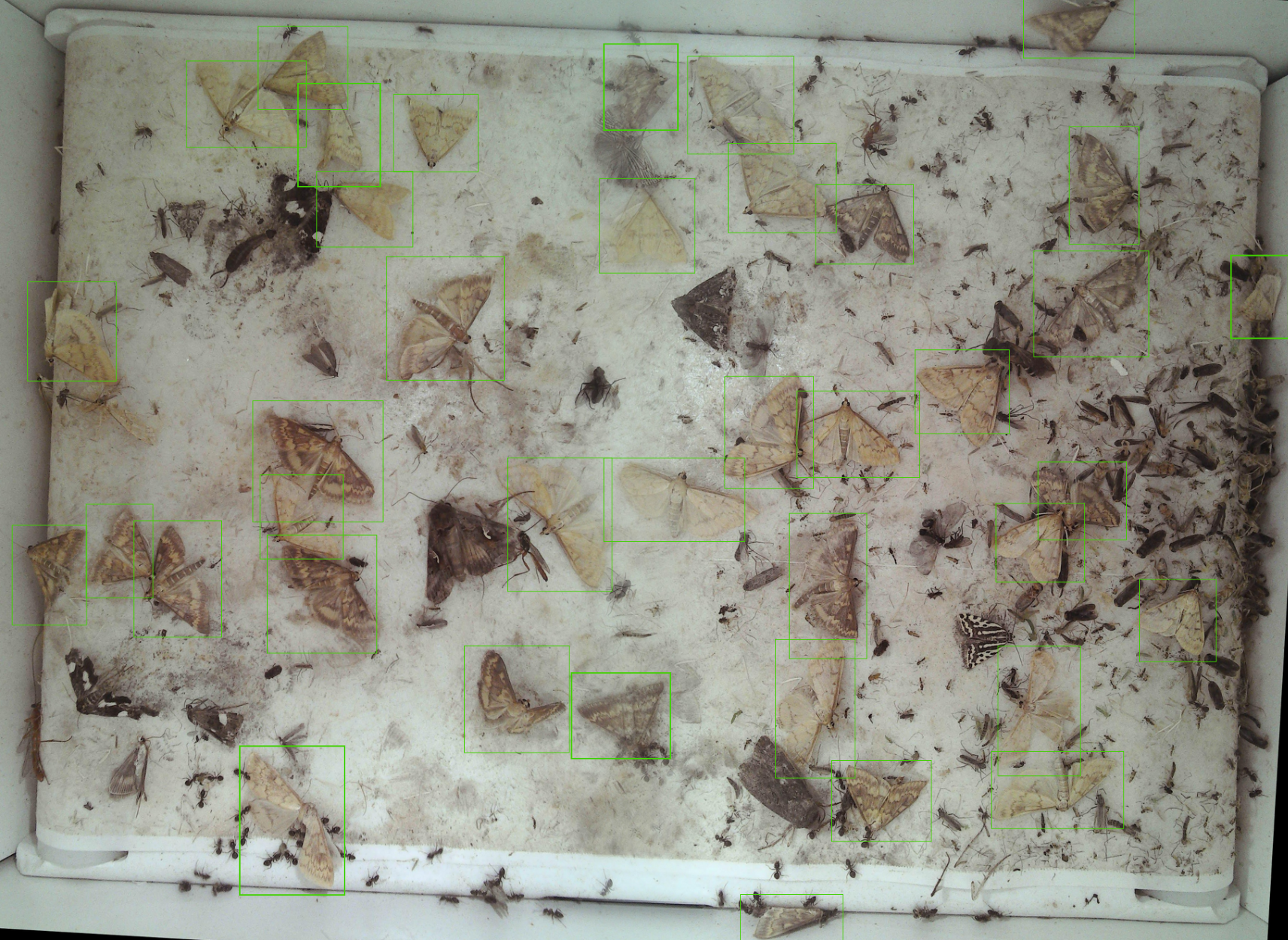
Catches of Ostrinia nubilalis – marked in green squares
Up to three generations in one season
One of the most interesting observations of the season came from the catch data itself. In a few locations, AURA 2 SC traps showed three distinct periods of Ostrinia activity:
- First flight: May to June
- Second flight: June to July
- Third flight: July to August

3 generations of Ostrinia nubilalis in one season
We want to be careful with the conclusions here. The picture above comes from traps where the pattern was clearly visible in the data. In other regions, our users reported similar observations, but these were shared as field feedback, and we do not yet have all the data to confirm them. The number of generations depends on many local factors, above all temperature and the length of the season, and it can differ between regions. Our team will keep analysing the data from the 2026 season to understand better what happened and where.
What we can say is that continuous, automated monitoring makes such patterns visible. Instead of relying on occasional checks, advisors and growers can follow Ostrinia activity throughout the season.
One trap, many insects
AURA 2 SC uses UV light rather than pheromones, which means it can attract and monitor several insect species at the same time. Alongside Ostrinia, the traps also recorded side catches, giving growers a broader view of what is flying in and around their fields.
Main side catches are:
- Mediterranean corn borer (Sesamia nonagrioides)
- True armyworm moth (Mythimna unipuncta)
- Cotton bollworm / corn earworm (Helicoverpa armigera)
- Sesamia spp.
An AI-triggered self-cleaning mechanism activates automatically after the photo of catches is taken, which keeps the trap working through long, busy flight periods with far less manual maintenance.
The Trapview app: from a single trap to the whole region
Catching the pest is only half of the story. The other half is making the field data useful. Analysed field data, reports and forecast are then seen and daily updated in the Trapview app.
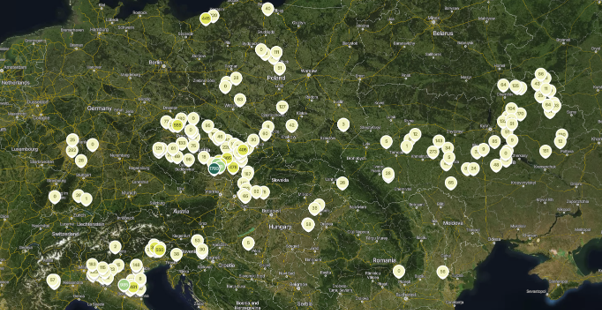
Accumulated Ostrinia pressure in 2026
In the app, users can see:
- Catches: the number of Ostrinia counted in the trap, updated automatically
- Pest preassure: when flight activity rises and falls during the season
- Weather data and weather forecasts
- Development stages: pest development stage forecasts for Ostrinia, helping to time interventions
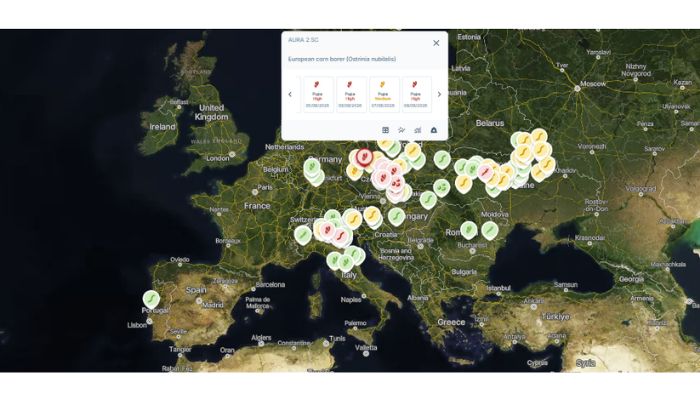
Ostrinia development stages
And the view is not limited to one field. Users can follow their entire network of traps, which makes it possible to see how Ostrinia activity moves and develops across a region or even a whole country. For advisors covering many fields, this means a clearer overview, less manual work, all information in one app and more confident recommendations.
A better way to know when and where to act
AURA 2 SC contributes to better supervision of Ostrinia presence, and together with the Trapview app it gives growers and advisors a better way to know when and where to act. The goal is practical: to help optimize, or even lower, crop protection costs while protecting yield.
Want to see how Trapview solution can support your maize monitoring next season? Get in touch with the Trapview team.