
Codling moth (Cydia pomonella) remains one of the most economically damaging pests in apple and pear orchards worldwide. Left unchecked, it can destroy anywhere between 60% and 100% of a crop, driving up fruit loss and the cost of crop protection. Yet one of the biggest challenges growers face is not a lack of tools to fight the pest — it is a lack of timely, reliable information about when and where the pest is actually active.
This is precisely the gap that automated monitoring, such as the Trapview system, is designed to close.
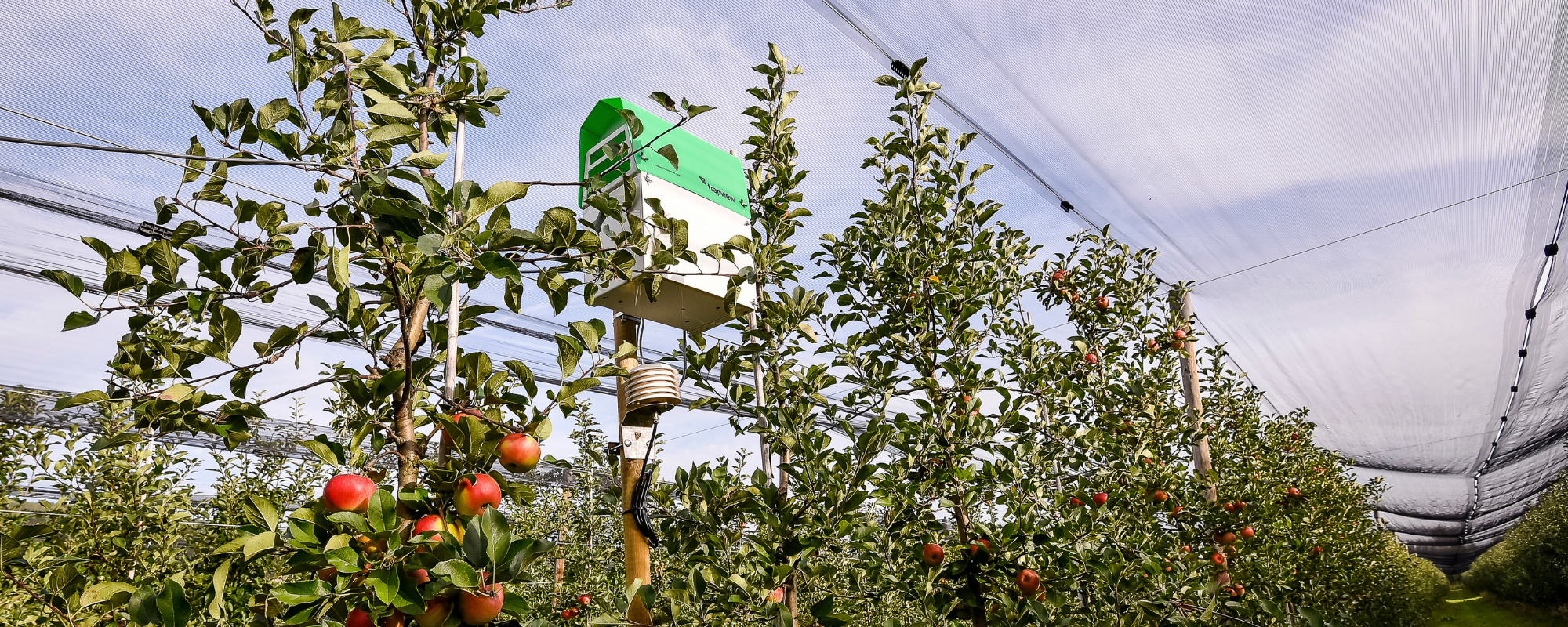
Trapview SLIT SC trap in apple orchard.
From the Orchard to the App, in Real Time
The process starts in the field, with automated pheromone traps placed directly among the trees. In the case of codling moth, this is the SLIT SC trap, specifically designed to attract and capture Cydia pomonella.
Unlike traditional traps, which require someone to visit the orchard, open the trap and count moths by hand, an automatic trap does this work continuously and sends the data straight to the Trapview app. There is no need for daily manual counting or repeated site visits simply to check whether a trap needs attention.
More Than a Trap Count
Once the data reaches the app, growers gain access to considerably more than a simple catch count. The Trapview platform combines several layers of information in one place:
- Real-time pest catches, updated automatically as it comes in from the field
- Local weather data and short-term forecasts, relevant to each specific location
- Predictive models of pest development, showing the expected phenological stages of the codling moth population over the coming days
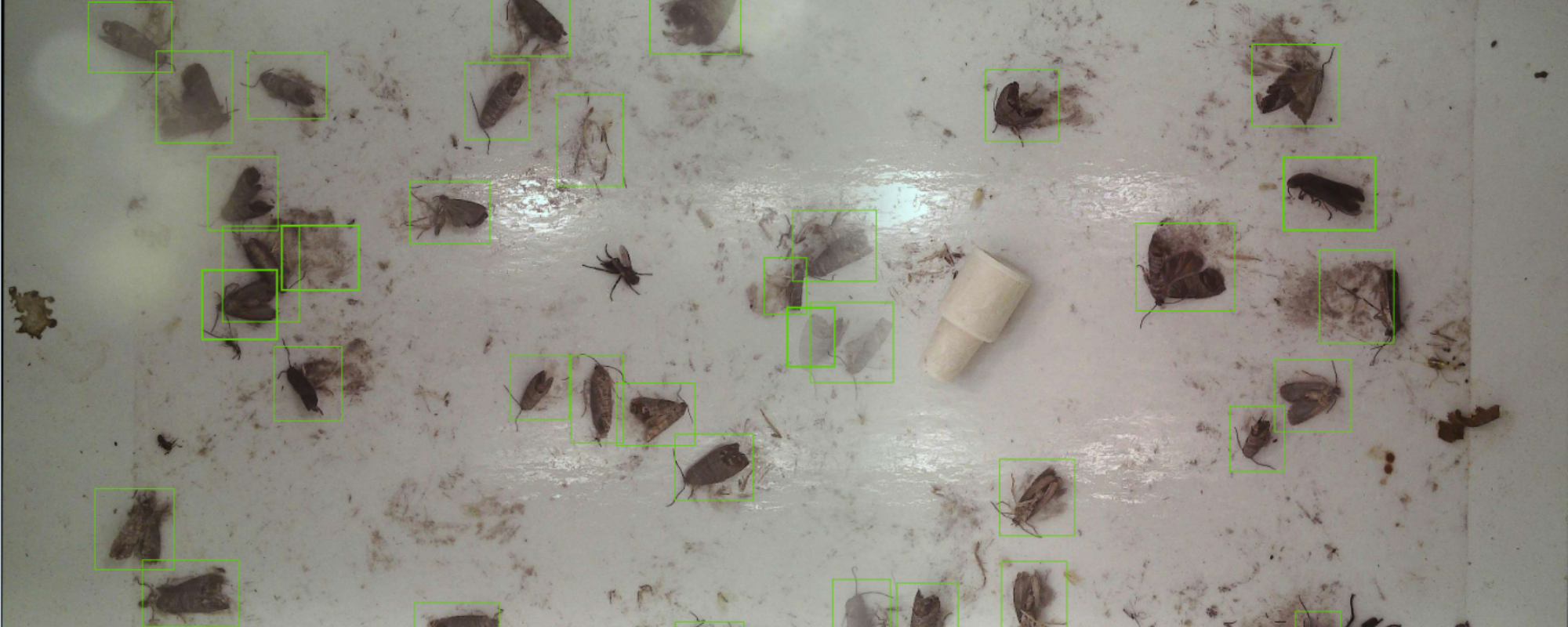
Codling moth catchs – marked green.
Taken together, this turns raw trap data into something far more useful: a forward-looking picture of pest pressure. Rather than reacting to what has already happened, growers can anticipate what is likely to happen next.
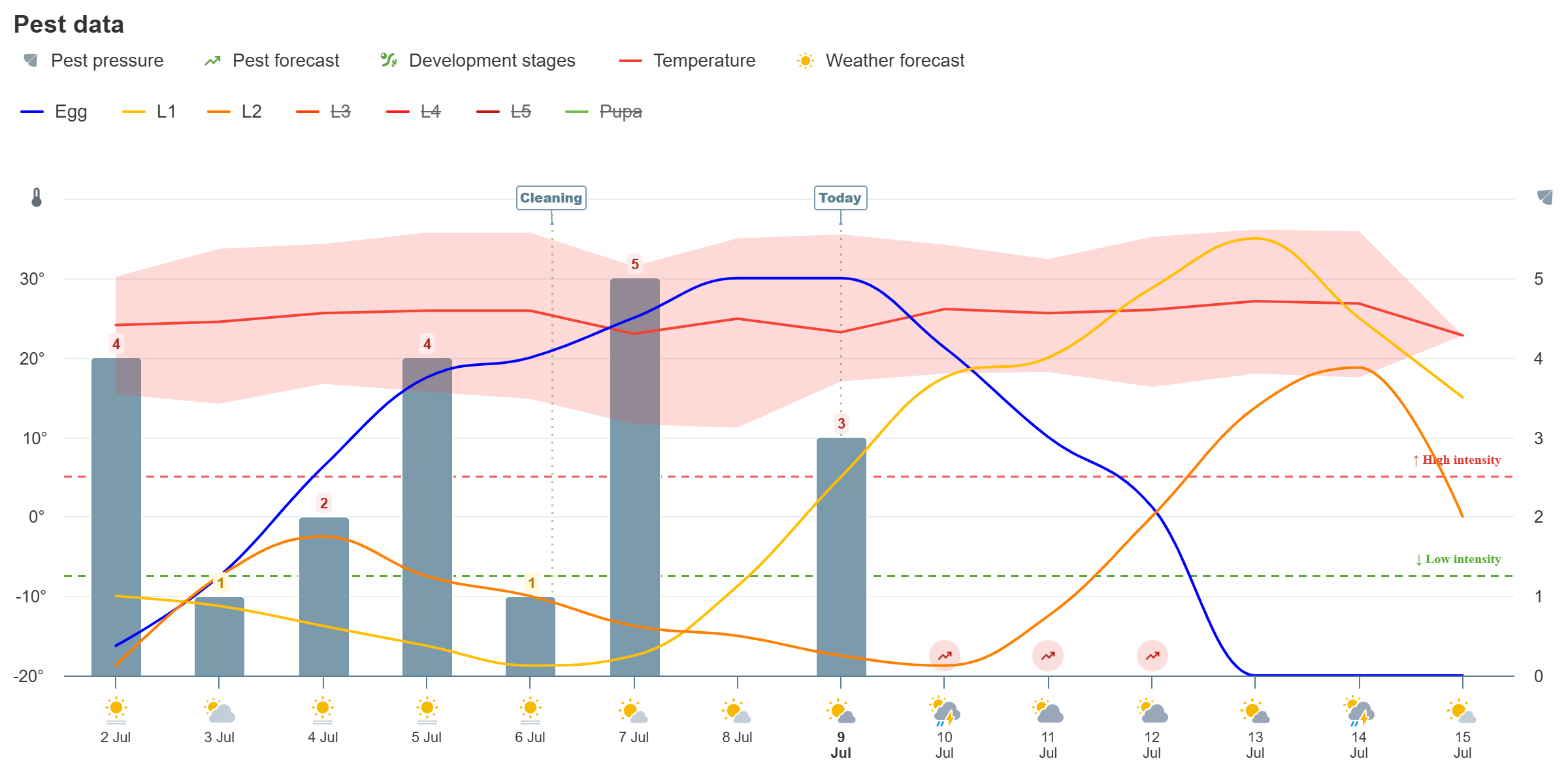
Detailed information for one trap, monitoring cydia pomonella.
From Data to Decisions
This forward-looking view has a very practical consequence: it tells growers when and where to apply crop protection products, based on the pest’s actual developmental stage rather than a fixed calendar. Treatments can be timed more precisely, applied only when genuinely needed, which supports both better pest control and a more targeted use of crop protection products.
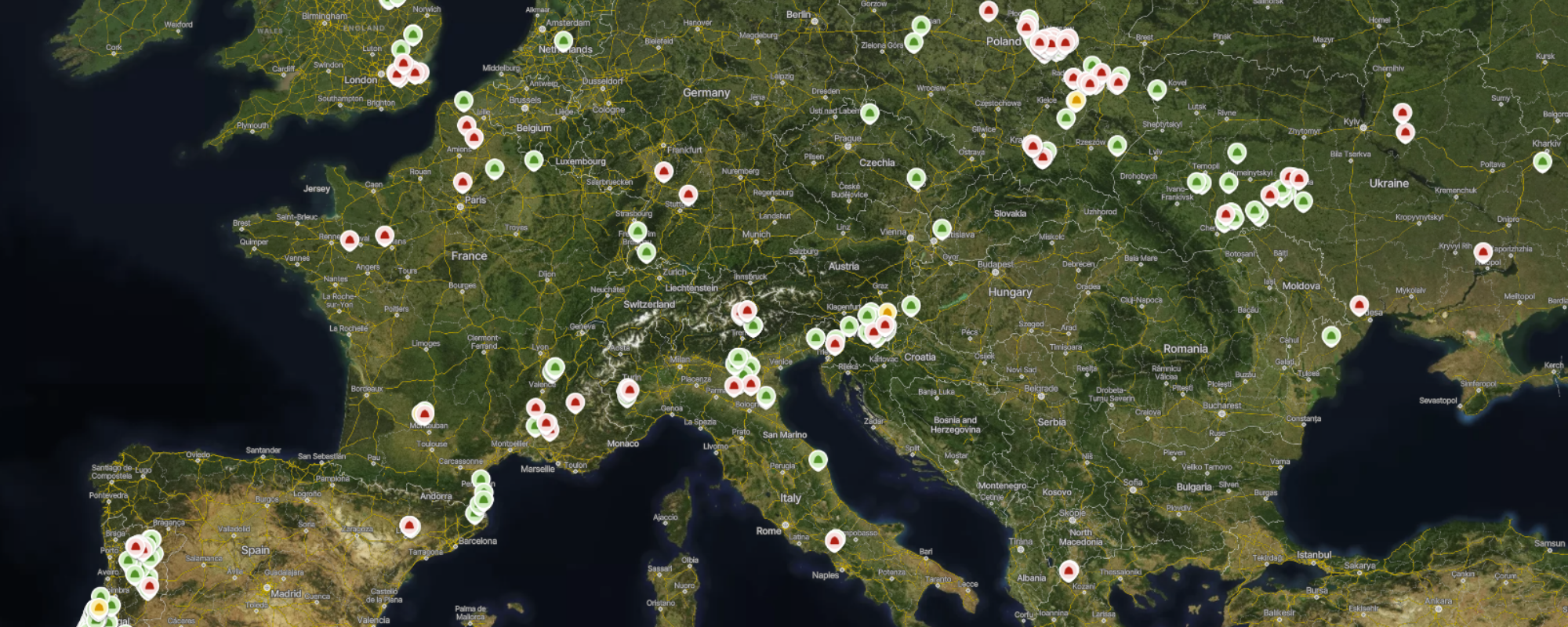
Trapview traps catching coling moth in Europe.
When traps are placed across several locations rather than a single site, this picture becomes even more valuable. Growers and advisors can observe how Cydia pomonella is moving and spreading across an orchard, a farm, or an entire region — insight that a single trap could never provide on its own.
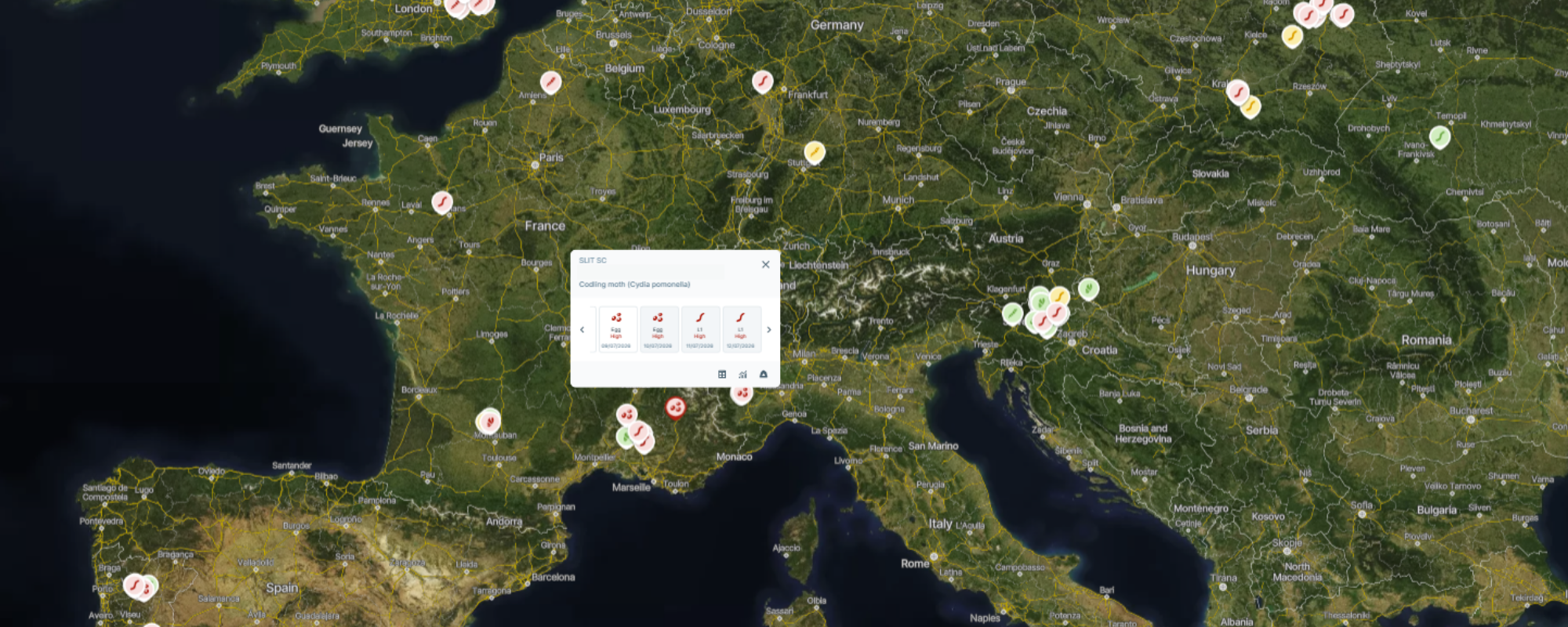
Map of pest development stages of codling moths.
Built to Scale, Without Adding Workload
Perhaps the most significant advantage of this approach is its scalability. Because the traps are automated, they require minimal manual intervention in the field, regardless of how many are deployed. Whether an operation runs one trap or one hundred, each trap feeds data into the same application, giving growers and advisors a single, real-time overview of pest activity across every location.
The practical result is twofold: lower labour costs for trap(s) maintenance, and complete visibility in one place, even as the monitoring network grows. Scaling up no longer means scaling up the workload that goes with it.
The Bigger Picture
Ultimately, this kind of system reflects a broader shift in orchard management — from reactive pest control based on fixed schedules, towards decisions informed by real, current, and predictive data. For a pest as persistent and costly as codling moth, that shift can make a meaningful difference to both yield and the efficiency of crop protection.